However, cybersecurity for small businesses often falls short of enterprise-level protection, leaving many vulnerable to new attacks. Smaller companies with limited IT resources, antiquated systems, and no security experts are easy targets.
Small organizations need a proactive, strategic approach to cyber security. Emerging AI cybersecurity threats demand strategy, knowledge, and the proper security partner, but not enterprise budgets.
What Are AI-Driven Cyber Attacks?
AI-driven cyber attacks are cyber threats that leverage machine learning and artificial intelligence to make bad things happen faster, better, and more efficiently. AI-powered attacks are different from traditional attacks because they can swiftly study a lot of data, find weaknesses, and change their strategies on the fly.
Cybercriminals use AI to:
- Automate vulnerability scanning
- Generate convincing phishing emails
- Bypass traditional security filters
- Analyze stolen data
- Crack passwords faster
- Mimic trusted individuals through deepfake technology
Why Small Businesses Are Easy Targets
Small businesses are frequently targeted because attackers see them as low-risk and high-reward opportunities. Many organizations assume that cybercriminals only pursue large enterprises, but small companies are often easier to compromise.
Common weaknesses include:
1) Limited Security Resources
Most small organizations operate with limited IT staff and budgets. Without dedicated cybersecurity specialists, security gaps often remain unaddressed.
2) Outdated Systems
Older software and unsupported systems create vulnerabilities that automated tools can easily discover and exploit.
3) Lack of Monitoring
Many small companies lack continuous monitoring, allowing attackers to remain undetected for weeks or months.
4) Valuable Data
Even small organizations store valuable information such as customer data, financial records, and intellectual property that criminals can sell or exploit.
This is one reason Why SMBs Should Outsource IT Security has become an increasingly important discussion. External expertise can close gaps that internal teams cannot manage alone.
How AI Is Making Cyber Attacks Smarter
Artificial intelligence allows cybercriminals to improve both the speed and accuracy of their attacks.
1) Highly Personalized Attacks
AI can analyze social media profiles, company websites, and public databases to craft highly targeted phishing messages that appear legitimate.
2) Automated Exploitation
AI tools can scan thousands of systems simultaneously, identifying vulnerabilities in minutes rather than days.
3) Adaptive Malware
Modern malware can change its behavior based on the environment, helping it avoid detection by traditional antivirus solutions.
4) Faster Attack Cycles
AI enables attackers to launch campaigns continuously, testing multiple attack methods until one succeeds.
As a result, organizations must move beyond basic defenses and adopt a layered approach to small business cyber security.
Common AI-Powered Threats in 2026
Artificial intelligence has significantly transformed the cyber threat landscape. These AI-driven cyber attacks are no longer limited to large enterprises; even small organizations are frequent targets because automated AI tools allow attackers to scale their operations efficiently.
Understanding the most common AI cybersecurity threats is a critical step in improving cybersecurity for small businesses and implementing effective defense strategies.
1) AI-Generated Phishing Campaigns
AI has made phishing assaults much more convincing. Today, attackers employ AI techniques to create professional, tailored emails that look like corporate communications instead of delivering generic, grammatical errors.
AI may target messages using company websites, employee profiles, and social media activity. The emails may include legitimate projects, vendors, or coworkers, making them hard to spot as fake.
2) Scams with Deepvoice and Video
Deepfake technology is fast evolving and threatening businesses. AI can now clone voices and create convincing videos of executives, vendors, and trusted partners.
An employee may receive a call sounding like their CEO asking for an urgent payment. Employees may act immediately without checking the request since the voice sounds genuine.
Artificial intelligence (AI) cybersecurity risks, like deepfake frauds are likely to rise rapidly.
3) Intelligent, adaptable malware
Traditional malware follows pre-programmed commands. However, AI-powered malware may adapt to its environment.
AI-based malware is harmful because it learns from failures and improves its behavior.
Cyber attacks are evolving, therefore advanced endpoint protection and monitoring are vital for businesses.
4) Automated Credential Attacks
The majority of companies still struggle with passwords. AI can examine vast databases of leaked credentials and predict password combinations with surprising accuracy.
AI-driven credential assaults use clever guessing to break into accounts faster than brute-force attempts.
5) Social Engineering with AI
With AI, social engineering attacks are increasingly complex. Attackers increasingly utilize AI-powered chatbots and automated messaging systems to connect with victims in real time instead of emails.
These systems can:
- Respond to questions naturally
- Maintain long conversations
- Build trust gradually
- Gather sensitive information
- Guide victims through malicious actions
For example, an employee might interact with what appears to be a legitimate IT support representative through chat or messaging. The AI-powered attacker can request login credentials or guide the employee to install malicious software.
Working with a Managed Security Provider
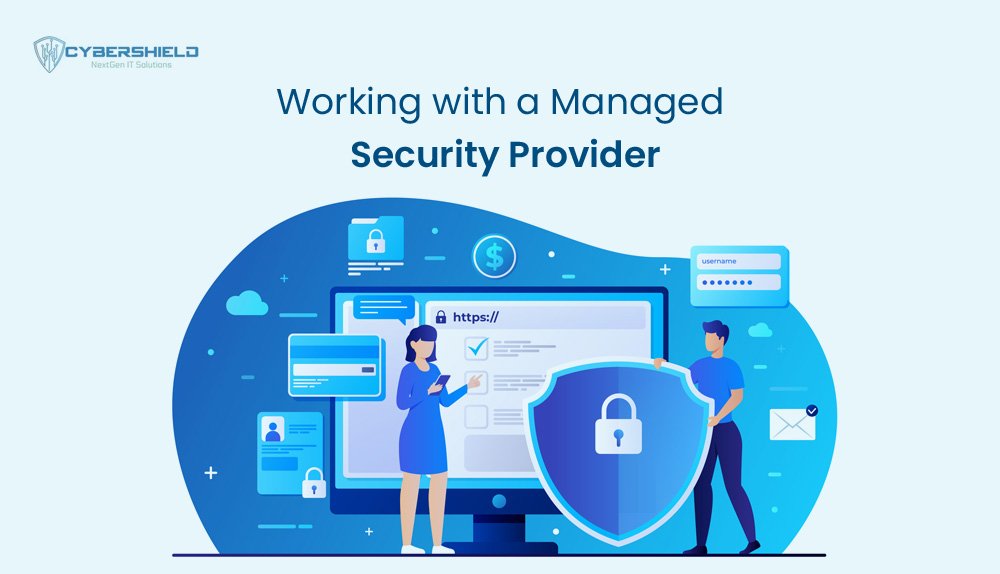
As AI-driven cyber attacks develop, small firms struggle to keep up with new threats, technology, and security legislation. Small businesses can improve cybersecurity by working with a Managed Security Provider.
Managed Security Service Providers protect enterprises 24/7. Instead of a small IT team, companies can hire cybersecurity professionals to monitor their systems, respond to assaults, and update their security architecture.
Working with Cybershield IT is smart since its MSSP Security Operations Center investigates alerts and suspicious behavior.
In an environment where AI cybersecurity threats can spread rapidly, early detection and fast response are critical.
Another important benefit is strategic guidance. A Next-Gen Managed IT Services Provider does more than simply maintain systems – they help businesses develop long-term security strategies that align with growth and operational goals. This includes risk assessments, security planning, compliance support, and technology recommendations designed to improve overall small business cybersecurity.
By partnering with a trusted provider like Cybershield it, businesses can better protect themselves from cyber attacks while gaining access to the technologies and expertise needed to defend against evolving AI-driven cyber attacks.
For many small and mid-sized organizations, working with a managed security provider is not only a practical solution – it is a strategic investment in long-term resilience and business continuity.