
Key Takeaways
- An incident response plan tells your team exactly what to do during an attack
- Small businesses are frequent ransomware targets
- Assign roles and keep phone numbers offline
- Write simple playbooks for your most likely threats
- Know your state’s breach notification deadlines
- Test the plan yearly with a tabletop exercise
Picture a Monday morning. Your front desk can’t log in, files have strange extensions, and a ransom note is sitting on the shared drive. Who do you call first? Do you unplug everything? Do you have to tell your customers?
If nobody on your team can answer those questions in under a minute, your business needs an incident response plan. Building one takes a few focused hours, not a big budget.
What Is a Cybersecurity Incident Response Plan?
A cybersecurity incident response plan is a written playbook that tells your team exactly what to do when a cyberattack, data breach, or security failure happens. It assigns roles, lists the steps to contain damage, and explains how to recover and communicate.
Think of it like a fire evacuation plan: nobody should be guessing where the exits are.
Why Small Businesses Need One Now
Attackers don’t skip small companies. Verizon’s 2025 Data Breach Investigations Report found ransomware showed up in the large majority of breaches at small and midsize businesses, far more often than at large enterprises. As the cyber threat landscape keeps shifting toward phishing, stolen passwords, and vendor attacks, smaller firms with fewer defenses become easy targets.
A plan won’t stop every attack. What it does is shrink the damage. Businesses that respond quickly and calmly lose less data, spend less on recovery, and keep more customer trust.
How to Create an Incident Response Plan in 7 Steps
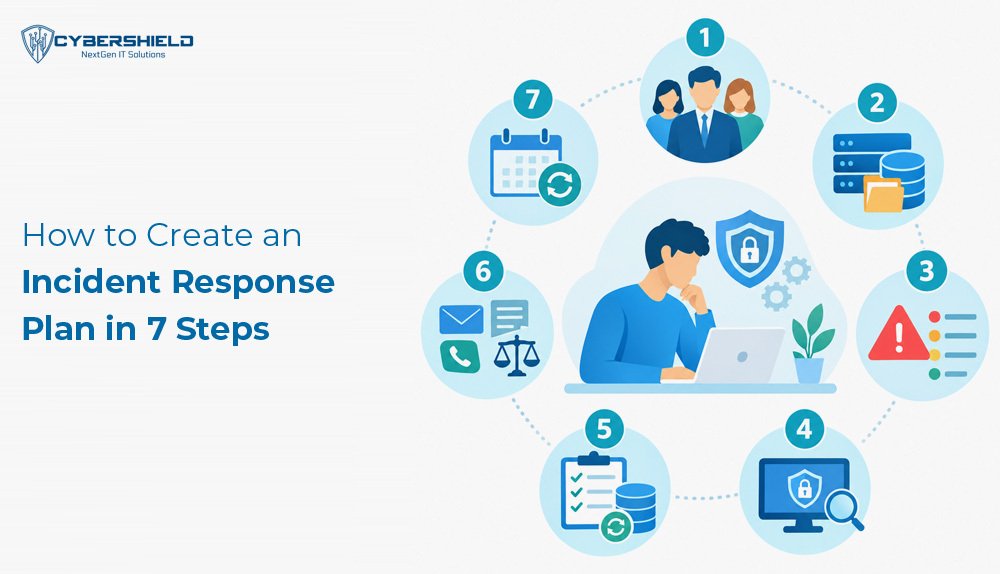
These steps follow the same lifecycle the National Institute of Standards and Technology (NIST) recommends, simplified for small teams.
1. Build Your Response Team
Name who does what. A small business team usually includes an owner or manager who makes decisions, an IT lead or managed IT services provider who handles the technical work, someone for customer and employee communication, and outside contacts like your attorney and cyber insurance carrier. Put phone numbers in the plan, not just email addresses, because email may be down.
2. Identify Your Critical Assets
List the systems and data your business can’t run without. That might be your accounting software, patient records, client files, or point of sale system. Knowing what matters most tells your team what to protect and restore first.
3. Define What Counts as an Incident
Not every alert is an emergency. Create simple severity levels, such as low, medium, and high. A single phishing email someone reported is low. A compromised email account sending invoices is high. Clear definitions prevent both panic and complacency.
4. Set Up Detection and Reporting
Employees should know exactly how to report something suspicious and feel safe doing it. Behind the scenes, you need monitoring tools and people watching them. Many small firms rely on managed security services for SMBs because round the clock monitoring is hard to staff internally.
5. Write Containment and Recovery Playbooks
For your most likely threats, write short checklists. A ransomware playbook might say: disconnect affected devices from the network, don’t pay or contact the attacker, call your IT provider, and preserve evidence. Include where your backups live and how to restore them. If your data sits in Microsoft 365 or other platforms, make sure your cloud security setup includes protected, tested backups.
6. Plan Your Communication and Legal Steps
Many states have breach notification laws with strict deadlines. Florida, for example, generally requires businesses to notify affected individuals within 30 days of determining a breach occurred. Your plan should note who contacts your attorney, insurer, customers, and law enforcement, and prepared message templates save precious hours.
7. Test It and Keep It Current
A plan sitting in a drawer won’t help. Run a tabletop exercise at least once a year where your team walks through a realistic scenario. Update the plan whenever staff, vendors, or systems change.
Common Mistakes to Avoid
The biggest is writing a plan only IT understands. Others include storing the only copy on the network that might be encrypted, forgetting to involve your insurance carrier early, and wiping infected machines before evidence is saved.
How CyberShield IT Helps
CyberShield IT has protected businesses since 1996, and we’ve helped Tampa Bay companies respond to everything from phishing scams to full ransomware attacks. That experience shapes how we build response plans: practical, short, and tested.
Our team works with you to map critical systems, assign roles, and write playbooks that fit how your business actually runs. We back the plan with 24/7 monitoring, secure backups, and a response team ready to act the moment something goes wrong. Many owners choose to outsource IT security to us so they can focus on running the business, knowing experts are watching. Explore our full range of cybersecurity services in Tampa to see how we can support you.